
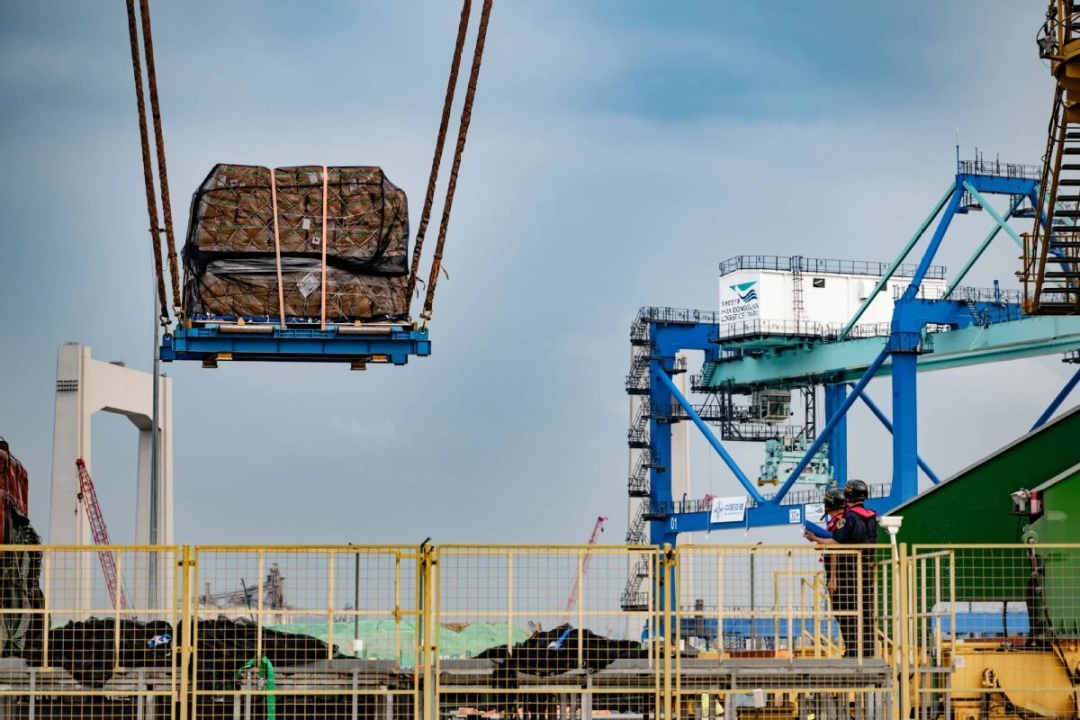
On the evening of November 16, a shipment of integrated circuits worth RMB 2.566 million completed security screening and palletisation at the HKIA Dongguan Logistics Park. The cargo was then transported by a dedicated vessel directly to the airside of Hong Kong International Airport, where it could be loaded onto a flight to Thailand without undergoing a second security check.
This routine shipment reflects Dongguan's increasingly close trade links with the Asia-Pacific. In the first ten months of 2026, the city's imports and exports with other APEC economies approached RMB 1 trillion, up 11.5% year on year, according to Huangpu Customs. The figure accounted for nearly 70% of the city's total foreign trade, meaning almost RMB 7 out of every RMB 10 in Dongguan's imports and exports came from APEC markets.
The logistics park brings key airport cargo functions, including screening, palletisation and cargo acceptance, to Dongguan before shipments travel by sea directly to the airport's airside. Compared with conventional routes, the model improves handling efficiency by 20% and can reduce overall logistics costs by 30%. From January to October, trade with other APEC economies through HKIA Dongguan Logistics Park reached RMB 10.59 billion, up 57.7%. Ten regular routes now serve major markets in Southeast Asia and North America, with some cross-border e-commerce shipments reaching overseas customers in as little as five to seven days.
Trade policies are providing an additional boost. During the same period, Dongguan Customs issued certificates of origin covering nearly RMB 40 billion in exports to other APEC economies, up 6.8%. Under the China–ASEAN Free Trade Area, for example, eligible goods accompanied by a certificate of origin can receive a reduced import tariff of 5%, down from 10%. In the first ten months of 2026, these certificates helped businesses save more than RMB 21 million in import duties. Together, faster logistics and tariff savings are helping local businesses respond more quickly to orders and compete more effectively across APEC markets.